


The ZCB Certification distinguishes its certification purposes within the building sector into Building Certification, Store Certification, and Construction Site Certification, all aiming to achieve carbon neutrality. Among these, Building Certification further categorizes its specific purposes based on the type of construction and the building’s usage duration.
For Building Certification, newly planned buildings or buildings with less than 5 years since occupancy approval fall under the category of New Building Certification. Existing Building Certification is intended for buildings that have been in use for more than 5 years since occupancy approval. Remodeling Building Certification is applicable to buildings that are undergoing or have undergone remodeling and have less than 5 years since completion.
Store Certification targets individual retail stores, shops, and similar establishments located within a building after its construction. This includes assessments of interior materials, as well as various operational facilities introduced after the building’s completion.
Construction Site Certification encompasses various construction sites, including new construction, expansions, demolitions, and reconstructions. It evaluates carbon emissions under Scope 1 (direct emissions), Scope 2 (indirect emissions), and Scope 3 (other indirect emissions) for a wide range of construction activities.
You can find guidelines for obtaining ZCB Certification for specific purposes. The guidelines provide criteria for assessing and certifying the targets for certification, as well as outlining the necessary requirements and procedures.

-
ZCB Overview

ZCB Certification aims to contribute to achieving carbon neutrality by minimizing carbon emissions throughout the entire lifecycle of the building sector.
Certification purposes are subdivided according to project characteristics into Building Certification, Store Certification, and Construction Site Certification. Depending on the project timing and evaluation objectives, the certification is carried out as either ZCB Preliminary Certification or ZCB Final Certification.
Building Certification
Download
(New, Existing, Remodeling) Store Certification Construction Site Certification -
New Building
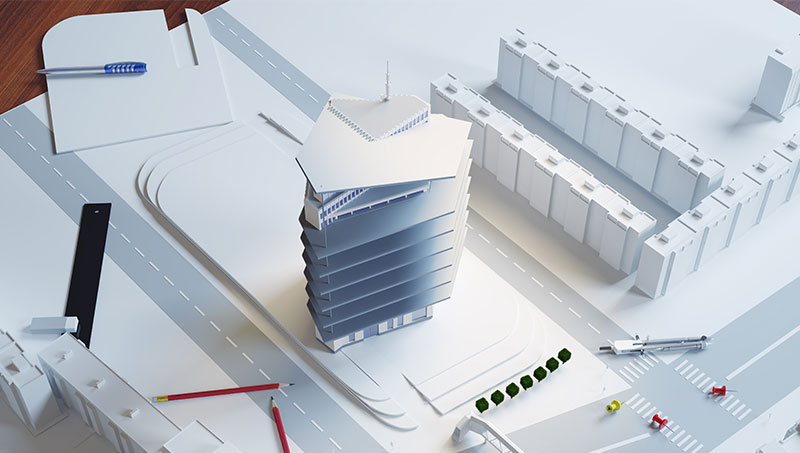
New Building Certification is carried out with the purpose of predicting the carbon emissions of newly planned or completed buildings in advance and optimizing the Zero Carbon Building Index (ZCBI) through the derivation of optimal carbon reduction technology elements.
In the case of Building Certification, buildings are classified as follows according to construction type and building usage period:
New Buildings : Buildings that are newly planned or less than 5 years since occupancy approval. Existing Buildings : Buildings that have been in use for more than 5 years since occupancy approval. Remodeling Buildings : Buildings that are planned for remodeling or less than 5 years since remodeling completion and occupancy approval.
Download -
Existing Building

Existing Building Certification targets buildings that are already in use and operation, aiming to calculate the current carbon emissions in order to establish measures for minimizing carbon emissions and maximizing carbon reduction.
For Building Certification, the Existing Building category assesses embodied carbon emissions based on the as-built documentation at the time of completion and calculates operational carbon emissions using actual energy consumption, such as electricity and gas.
The certification applies to buildings that have been in use for more than 5 years since occupancy approval or remodeling completion.
Download -
Remodeling Building

Remodeling Building Certification is carried out with the purpose of predicting carbon emissions before and after remodeling, as well as the carbon reduction achieved through remodeling, in order to improve the building’s occupancy performance and energy performance and to optimize the Zero Carbon Building Index (ZCBI).
This involves assessing embodied carbon emissions based on remodeling design documents and calculating operational carbon emissions through energy simulation.
The certification applies to remodeling buildings from the design stage through to buildings that have been completed and in use for less than 5 years after remodeling.
Download -
Store

Store Certification is carried out with the purpose of minimizing carbon emissions from interior construction and various operational facilities according to the characteristics of each store, as well as securing carbon reductions through external reduction projects and carbon credits.
This involves assessing embodied carbon emissions based on interior design documents and calculating operational carbon emissions through dynamic energy simulation or actual energy consumption, such as electricity and gas usage.
The certification applies to individual retail stores, shops, and similar facilities, and evaluation can be conducted from the interior design stage through completion and the operational stage.
Download -
Construction Site

Construction Site Certification is carried out with the purpose of minimizing carbon emissions generated during construction activities and achieving carbon neutrality on construction sites through carbon reduction activities applicable on-site.
This includes evaluation of Scope 1 and Scope 2 emissions from construction equipment, site office operations, and material transportation, as well as Scope 3 emissions from the extraction, manufacturing, and transportation of construction material raw materials.
The certification applies to various construction sites, including new construction, expansions, renovations, and reconstructions, where construction is planned or completed within the past year.
Download